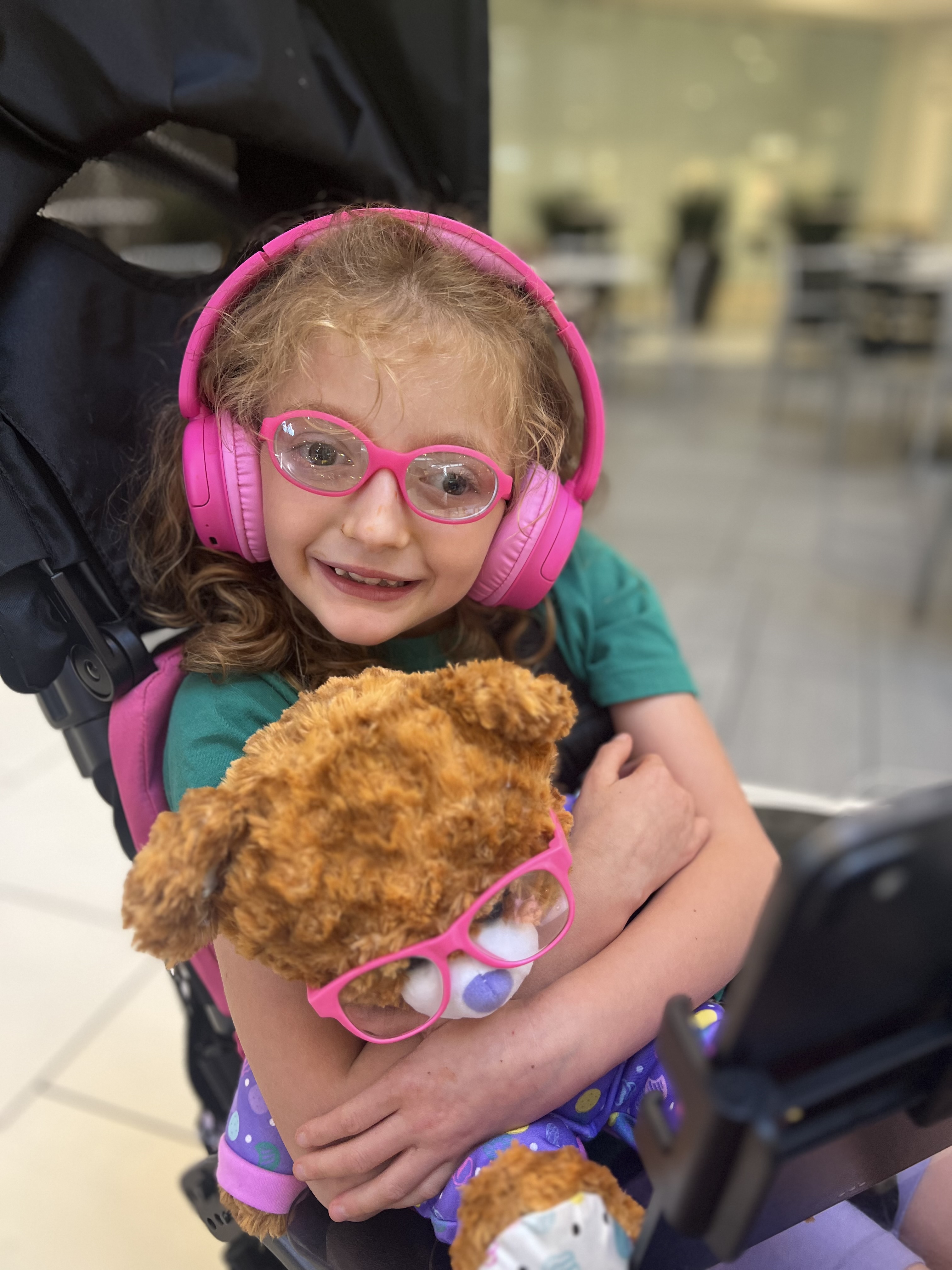
Della's Story
My name is Della. My husband and I retired, and through unexpected family circumstances, we became the guardians of our granddaughter, Maggie. She is now 9 years old and has a rare chromosome disorder called Wolf-Hirschhorn syndrome. Because of her disabilities, she requires constant supervision and assistance throughout the day. Maggie receives Kentucky’s Home and Community Based Waiver, and our family uses Participant Directed Services (PDS).
The waiver has allowed another caregiver to come into our home and help care for Maggie. Having another caregiver means I have the support I need to continue caring for her while also giving Maggie opportunities to experience life in our community. Because of that, she gets to enjoy the same childhood experiences as other children her age—going to the library’s summer reading program, swimming at the public pool, attending Vacation Bible School, participating in Girl Scouts, and playing with children in our neighborhood.
The waiver has also provided the medical care and specialized equipment Maggie depends on every day. The equipment supports her body, helps prevent injury, and allows her to safely participate in everyday life. It includes her specialized car seat, medical stroller, feeding tube supplies, and a Safety Sleeper® bed. The waiver has also provided speech, feeding, physical, occupational, and hippotherapy. Those therapies help Maggie communicate, eat safely, stay mobile, and learn the skills she needs to be as independent as possible.
The waiver allows Maggie’s individual needs to be addressed in her own home and community. Her therapies, equipment, and daily supports are all focused on helping her become as independent as possible. Every skill she learns—whether it is communicating, moving safely, feeding herself, or participating in her community—is another step toward greater independence as an adult.
Because of the Home and Community Based Waiver, Maggie has been able to remain at home with her family while receiving the care and support she needs to stay healthy, safe, and continue growing. The waiver also makes good financial sense. Providing individualized support in her home and community costs taxpayers far less than institutional care while giving Maggie the opportunity to live a fuller, healthier life.
One of my greatest concerns is that reductions in Medicaid reimbursements and waiver funding could make it harder for Maggie to receive the supports she depends on. Without caregiver support, therapies, and specialized equipment, much of our time and energy would be spent simply meeting her daily care needs. Without consistent therapy support, Maggie could lose some of the skills she has worked so hard to gain. Every milestone has taken years of therapy, practice, and encouragement. She could also lose opportunities to learn, grow, and participate in the community that has become such an important part of her life.
I also believe it’s important for Maggie to be visible in her community. When children with disabilities are included in everyday activities, they become friends, classmates, and familiar faces—not strangers. The children growing up with Maggie today will one day become teachers, healthcare professionals, business owners, and community leaders. By knowing Maggie now, they’ll have a better understanding of people with disabilities when they’re making decisions that affect our communities.
The Home and Community Based Waiver has made a tremendous difference in Maggie’s life and in ours. It has allowed her to remain at home with the people who love her while receiving the individualized care, therapies, equipment, and support she needs to be healthy, safe, and become as independent as possible.
Our hope for Maggie is no different than our hope for all of our children and grandchildren—that she receives the support, education, and opportunities she needs to become as independent as possible as an adult while continuing to live a healthy, meaningful life in her home and community.